Main | February 2008 »

January 2008

January 30, 2008

TGRWT #8 white chocolate and caviar

Chadzilla is a food blog written by chef Chad Galiano that I always find inspiring. When he announced that he would be hosting round #8 of TGRWT(They Go Really Well Together) and put white chocolate and caviar on the table, I knew that I wanted to play along.

To my knowledge, Heston Blumenthal was the first to pair caviar with white chocolate. I recall reading an article which appeared in the Guardian back in 2002 and being shocked by the combination, but intuitively, I knew that it would work; salty and briny with a sweet, milky finish. Since then, many chefs have adapted this pairing and put their own spin on it. Recently, I sampled Will Goldfarbs version--Indonesian vanilla ice cream with American Sturgeon caviar and chocolate bits at Dessert Studio at Michel Cluizel--and they did indeed go really well together.

Blumenthals version calls for a dollop of caviar atop a thin white chocolate disc and suggests that the whole thing be placed on the tongue and allowed to melt. I don't know about anyone else, but once food enters my mouth, it must be chewed. And chew I did, and spoiled the experience.

For my version, I wanted to soften the bite of the white chocolate without losing the mouthfeel. I combined creme fraiche (to tame the sweetness) with white chocolate in a 1:2 ratio to create a firm ganache that could be molded into a caviar-filled truffle. Molding the ganache without crushing the caviar was a challenge. Using demi-sphere silicone molds that were filled with the fluid ganache, frozen, hollowed, filled with the caviar, than gently pressed and blended together was a bit tedious, but produced the product that I was looking for. Now I could enjoy the sensation of biting through the soft, creamy shell, the release of delicate pearls spilling out onto the tongue, the play of crunch and melt, sweet and salty--the familiar taste of childhood Easter bunnies with x-rated caviar.
                          Whitechoccaviar_032psp
The only thing that could heighten the experience, I decided, would be the addition of a dry, crisp element. Potato chips came to mind, and I taste-tripped back to a dessert that I had at WD-50, in which Alex Stupak studded a flexible white chocolate ganache ribbon with sweetened, dehydrated potato shards. He served this with a white beer ice cream, in which the element of bitterness was mind blowing; a revelation. The whole combination bordered on culinary genius except for the indiscernible flavor of potato in the shards. I really wanted to taste their earthiness with the white chocolate, so I fried up some thin slices of potato, then dehydrated them until they were crisp and sprinkled them with sea salt. Nibbling on these between bites of the truffle added another dimension to the experience. But I have never been one to leave well enough alone...

When considering the combination of caviar, creme fraiche, and potatoes, it was not a leap to add vodka to the equation. I could have just poured it into a shot glass, but the fingerling potatoes were too perfect in size and shape to not utilize them as a vessel. A little dusting of chopped dill and I knew thaat it was done.
                    Whitechoccaviar_018psp
Recently, I had a conversation with a chef friend about chocolate pairings. When I mentioned this combination, I saw a look of panic flicker over her face. I assured her that it is good and cited some examples. She wasn't convinced and asked,"What's next...chocolate and blue cheese?" I thought about that for a minute and could only smile while I silently thanked her.

January 23, 2008

fig x3

Figtrio_009pspJanuary is not normally thought of as fig season, but I had about a dozen perfect specimens left over from a catering job. While I was packing up the car, I realised that I had not eaten and my stomach was beginning to protest. I put the leftover figs and some cheese within arms reach for the long drive home. I munched happily, marveling at how perfectly ripe the figs were, and began composing this dish in my head. The thing about serving different preparations of the same item on one plate is that they should each be unique in flavor, texture, and presentation in order to create excitement, yet there should exist some thread of continuity between them--they should relate to one another--otherwise, you will only create confusion and disparity. With this "rule" in mind, I decided on flavors and presentation and made mental lists, but when I went to reach for another fig, there were no more...I had eaten every one. I knew that I could not wait until next fall to execute this dish, so I decided to side track my route home to the store where I had purchased them with hopes that there would be more. I was lucky, there was one box left for me.


Figtrio_043psp


Tangy, herbal

fresh fig, trimmed to expose soft interior, marinated in A L'Olivier Figue (great product), set on a bed of selvatica arugula, dressed with figue and marjoram oil vinaigrette.


Figtrio_028psp

Salty, sweet, herbal

fresh fig, lightly poached with hibiscus and elderflower, split and filled with compressed ball of minced serrano ham, toasted hickory nuts and fresh marjoram, dressed with marjoram oil and sprigs.


Figtrio_044psp


Sweet, tangy

sliced fig dome filled with dolce gorgonzola and caramelized mascarpone set on base of hibiscus soaked olive oil genoise, served with dehydrated rambutan


January 18, 2008

pear butterscotch gingerbread

Pearbutterscotch_021psp

comice pear
butterscotch pudding
caramelized mascarpone
gingerbread pebbles and soil
hickory nut cream
roasted pear gel

January 15, 2008

mascarpone and caramelized milk

Mascarpone is a lovely  substance...a thick triple-cream cheese that tastes of sweet cream with a tangy finish. It is far too rich to eat more than a spoonful or two straight up, but it is indispensable as an ingredient. A few spoonfuls stirred into a soup, pasta or risotto will elevate it from good to sublime. It makes an amazingly creamy and rich ice cream, tames the sweetness of  caramel, and stabilizes whipped cream.

Mascarpone can easily be made at home from heavy cream (pasteurized produces a better product than ultra pasteurized) and tartaric acid (the primary acid found in wine--can be purchased online or at a wine-making supply store). It takes less than 10 minutes to prepare, but it must thicken and drain for 12 hours before it can be used.

Here's how:
Mascarpone_009psp

Mascarpone

2 cups heavy cream
1/8 teaspoon tartaric acid

Heat cream in a heavy saucepan to 180 degrees F. over medium-high heat, being careful that it does not scorch. Remove from heat as soon as it comes up to temperature and stir in the tartaric acid. Continue stirring for 1-2 minutes. Transfer to a glass or plastic container and refrigerate for 2 hours. At this point, it should have thickened significantly. Set a sieve over a bowl and line it with a triple thickness of cheesecloth and pour in mascarpone. Let drain for an additional 10 hours in the refrigerator.

Mascarpone_017

Yesterday, I found myself with a fresh supply of mascarpone and a question that I have been pondering: Could mascarpone be caramelized?
I knew that I could stir in some burnt sugar and cook it down a bit  , but I didn't want to swing it that far into the sweet zone. What I wanted was to maintain the balance of sweet and tart, but deepen the flavor; make it more complex. But if I didn't add sugar...would it still caramelize? Some would argue that the absence of sugar would instead cause the milk solids to toast (as in browned butter), but heavy cream does contain some sugar (16 grams per cup), so I got busy...

I packed mascarpone into a half pint mason jar, leaving an inch of headroom at the top, then sealed it with a lid and band. I then placed it on a folded towel in a pressure cooker and poured in about 3" of water, sealed the cooker and and brought it up to pressure. Worried about the water level, I decided to check it after 30 minutes. (My paranoia about letting the water bath dry out stems from a dulche de leche incident a few years ago involving a can of sweetened, condensed milk in a saucepan and one distraction too many...I'm still cleaning that mess up.) The water level had gone down about an inch, which I replaced, and it was just starting to take on color. I placed it back in the cooker for another 30 minutes. The color had noticeably deepened and it appeared to have retained its creamy texture, so I decided to stop there. As soon as it had cooled, I popped the lid and there it was...the sweet, nutty, toasty aroma and flavor that I was looking for. I now had a product that was familiar in texture and mouth feel, yet more complex and nuanced in flavor to play with.

Caramelisedmilk_02100psp_2

Heady with success, I wondered what else could Be caramelized. I put every dairy product that I had on hand into mason jars and processed them in the same way. Here's the results:

hits  deepened color, taste and aroma, unaltered texture

Wholemilkpsp   

    whole milk
    processed for 90 minutes


Hvy_creampsp

    heavy cream
    processed for 90 minutes


Evapmilkpsp


    canned evaporated milk
    processed  for 90 minutes


misses  deepened color, taste and aroma, altered texture

Lebnepsp

    lebne
    processed for 60 minutes
    (formed soft curds that could be whipped until creamy, but remained slightly grainy)


Sourcreampsp
    sour cream
    processed for 60 minutes
    (formed firm curds; texture could not be restored by whipping)


conclusions
   It appears that the cultured products curdled under the intense heat/prolonged cooking, while the uncultured ones achieved the desired effect. This is just a rudimentary observation...I wish that I knew more about the science at play here. Regardless, I am happy with the 4 new products that I have here. I am especially excited about the versatility of heavy cream and what it can produce: flans, custards, whipped cream and maybe even butter. Back to work play.

UPDATE: Chemistry professor and author Robert L. Wolke writes in his book What Einstein Told His Cook, "the word caramelization should be reserved for the browning of sugar- any kind of sugar- in the absence of protein. When sugars or starches occur together with proteins as they do in onions, breads, and meats, the browning is mostly due to the Maillard reaction, not caramelization."
So. I guess that I should refer to these products as Maillard milk.

January 14, 2008

snow day

A blanket of snow has fallen overnight in Connecticut.
A perfect day to play in the kitchen.
Snowday

January 10, 2008

duck fennel plum

Duckfennelbloodplum_038psp

star anise spiced duck breast
fennel mousse
duck plum star anise reduction
blood plum gelee
dried plum croquant
candied fennel
almond
plum blossoms

January 08, 2008

tequila sunrise

Ah, citrus...a ray of sunshine in the bleak of winter.

One of the first elaborate dishes that I recall making with citrus was a terrine in which supremes of various citrus were layered in a mold, ascending in color from dark to light. Each layer was set with its own gelled juice and when sliced, made a stunning presentation.  I served it as a dessert then, with white chocolate ice cream and a caramel tuile, but I have since used it as a component to other courses. In fact, I have come to rely on it as a bright, high note to play off of other elements such as lobster or ginger glazed duck.

I've been thinking about this terrine lately--how to refine it and simplify its form. When considering the translucency of the citrus slices, tissue paper came to mind. If you are me, when the brain connects food to a non food item, its time to play.

Tissue paper collage was my introduction to color mixing, learning how layering colors produces new colors and design. This concept, applied to food really excites me, because of the added element of taste. Imagine a collage of thin veneers of poached vegetables layered on a plate, each bite a different color and flavor...the mind reels with possibilities. Back to the task at hand...

Keeping the design linear produced an ombre effect. I couldn't help but think of a Tequila Sunrise, which threw me in a new direction with flavors. Color is always foremost in my mind when designing a dish, and I decided that green was where I wanted to go with this. I auditioned different flavor combinations and chose pumpkin seeds (pepitas), green chili, and cilantro. I knew that texturally, I wanted a rich, creamy element and so I combined the ground pepitas with yogurt (I would have used kefir or labne if I had some on hand) and allowed it to drain overnight to produce a sort of cheese. The green chili and cilantro oil adds a counterpoint of heat and herb. 

What to drink with this? Tequila, of course...preferably a smooth, balanced anejo like Chinaco.

Citruspave_035

                                 Citrus Pave

pave:
thinly sliced supremes of:
blood orange
ruby grapefruit
orange (reserve juice)
white grapefruit (reserve juice)
1/2 tsp gelatin
1 oz tequila
   On a sheet of plastic wrap, lay down overlapping slices of citrus starting at the top with the white grapefruit, in shingle-style rows, working down to the blood oranges. Keep in mind that the surface touching the plastic wrap will be the top.  Place in the refrigerator to chill thoroughly. Combine the reserved juices and measure  1/2 cup . Sprinkle the gelatin over and allow to soften. Heat until gelatin dissolves. Stir in tequila and let cool to room temperature. Remove pave from refrigerator and spoon a thin layer of the gelatin over the top of citrus, spreading to completely cover. Chill until set and repeat 2-3 times until  you have achieved an even, thin layer that will hold together the slices.

pumpkin seed- yogurt cheese:
1/2 cup yogurt
2 Tbsps finely ground pumpkin seeds
pinch salt
   Mix all ingredients together well. Make 4 small cones out of triangles of parchment. Snip the tip to produce a small hole for drainage and suspend them in tall shot glasses so that their tips are not touching the bottom, and fold back the parchment that rises over the glass. This is easier to do if you slit the excess parchment to the rims. Tie a string or rubber band over the excess to secure. Spoon in about 2 Tblsps of yogurt mix into each cone, being careful to not leave air pockets. Move to refrigerator and allow to drain overnight.

serrano-cilantro oil:
Flesh from 2 serrano chilies
1 cup cilantro leaves
pinch salt
3/4 cup avocado oil
   Place the chilies,cilantro and salt in a blender or food processor with a little of the oil until finely chopped. Drizzle in the remaining oil with the motor running.

to plate: Cut the pave to desired size. Invert onto plate using the plastic wrap. Unmold cones by peeling away the parchment. Arrange on pave and dot plate with oil.
 

January 07, 2008

Sweet Lemon/Sour Orange

you just know that Mother Nature was giggling when she planted these.

Sweetlemonsourorange_005psp

These are not new, just new to me.

(left) Sweet Lemon (Citrus Limetta) Round and thin skinned, these seemed so promising when I scratched and sniffed the rinds-- heady and floral with spicy undertones-- but the pulp is a disappointment-- insipid and unremarkable. At least I can salvage the zest. A quick search yielded no practical uses...can't imagine why this one is still being propagated.

(right) Sour Orange (Citrus Arantium) Also known as bitter orange, this is the All-Star of the orange game. It makes the best marmalade and is used to flavor Grand Marnier, Curacao, and Triple Sec. Its flowers lend their fragrance to orange flower water and the seductive Neroli oil. The pulp is wonderfully puckery and sweet-- that is if you can get to it through all of the seeds. No danger of extinction here. I plan to preserve these in salt. After a few weeks, I can utilize them in a relish with cerignola olives, toasted marcona almonds, and roasted piquillo peppers.

January 05, 2008

I think my mailman hates me.

He left a note in my mailbox.
He asked me to pick up my mail in a timely fashion.
I don't think that I like his tone.

Catalogs_002

January 04, 2008

The call of the rainforest

While the temperature hovers around 0 degrees here in the Northeast, I should be thinking about hot, soothing soup, or a slow-braised joint of meat. Instead, I am finding comfort in dreaming of the tropics.

The rainforest fascinates me...an infinite and largely undiscovered source of plant and animal life. As a teenager, I spent a glorious month in Brazil, staying with family in Santos, but my stay was confined to the coast around Sao Paulo, and only skimmed the outer edges of the Amazon.

Perhaps the most celebrated chef in Brazil today is Alex Atala of D.O.M. Restaurante in Sao Paulo, which is counted among the top 50 restaurants in the world. Besides being a gifted chef and speaking 3 languages fluently, chef Atala is enthusiastic about discovering and sharing the resources of the rainforest, which he calls "a universe of aromas". This is no small feat, considering that the Brazilian diet is still tied to old customs and subsists largely on rice and beans and other imported goods.

Seabass_banana_tamarind_psp

Having captured my imagination, I set out to weave together flavors/aromas from crops that are widely grown in rainforest climates...and I do mean weave in a literal sense...hey, if Wylie can tie foie in a knot, why not weave?  I edited a long list of possibilities down to those that I knew would work well together:
banana
coconut
lime
tamarind
coffee
vanilla
cashew

I began with a piece of grouper, which was seasoned and placed in a bag with vanilla-infused coconut milk and a piece of banana leaf, sealed under vacuum, and cooked sous-vide at 50C for 20 minutes.

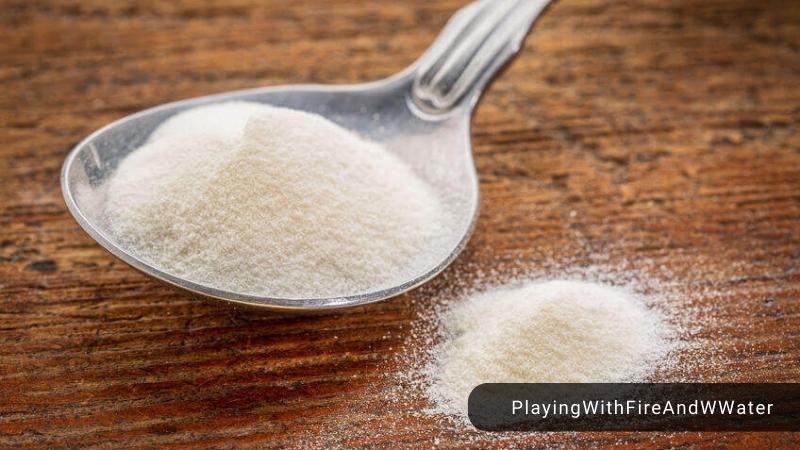
Next, I separated the flavors and aromas into two agar sheets. I chose agar because of its heat stability--I didn't want it to melt as soon as it came in contact with the hot fish--but I was careful to keep these sheets on the soft side, barely firm enough to manipulate. The first sheet (creamy, rich, slightly sweet)  was made by mashing bananas with lime juice(for flavor and to retard darkening), I added agar to the coconut milk, brought to a boil, then combined this with the banana mash. I then poured this out onto a plastic-lined flat container to a thickness of 1/4" and chilled until set.

The second sheet (aromatic, tart, bitter) was made using the same procedure, except the agar was heated with tamarind puree and a hint of vanilla extract, then combined with a pulled shot of espresso and molded.

After both sheets set up, I cut them into 1/2" strips and carefully wove them together, holding them in the refrigerator until just before service, when they were inverted onto the squares of grouper. To finish, a little sprinkle of ground cashews and lime zest.

So, you may ask, is this dish "a universe of aromas"?
No...but, maybe a microcosm.

Intro

  • Cooking, elementally, is controlling heat and moisture. The great cooks are masters of fire and water. Me, I'm still playing...welcome to my playground.

of interest