Occasionally, I find fallen nests when cleaning the hedgerows. They are irresistible to me, these vestigial homes; fragile and singular as snowflakes.
I find colonies of violets in the hedgerows, too. Their cheerful pale blue flowers and heart-shaped leaves look content in the cool, moist environment. Unfortunately, these are the common dog variety (Viola canina) and are not graced with the perfume of the sweet violet (Viola odorata)
Although sweet violets have been widely used in the fragrance industry for centuries, they have no significant culinary tradition aside from the Victorians, who were fond of garnishing sweets with the crystallized flower. Their symbolic connection to spring and haunting aroma have been venerated and romanticized throughout history by artists, poets, monarchs, and even Gods.
Napoleon shared a devotion to violets with the Empress Josephine. During his exile at Elba, he promised his followers that he would return in the spring with the violets. This set off a loyalist obsession with the flower, immortalizing the violet as the emblem of the Imperial party, and earning him the nickname "Corporal Violette". He is said to have been buried with a lock of Josephine's hair and violets in a locket.
In Greek Mythology, Zeus ordered the Earth to create the most beautiful of flowers in tribute to his love, Io. The result was the violet.
Ion, the Greek word for violet, lends its name to the terpene Ionone, the defining aroma compound in violets. Ionone is a megastigmane, or a degradation of beta-carotene. Not surprisingly, carrots contain a fair amount of ionone, as do raspberries, tobacco, roses, and black tea.
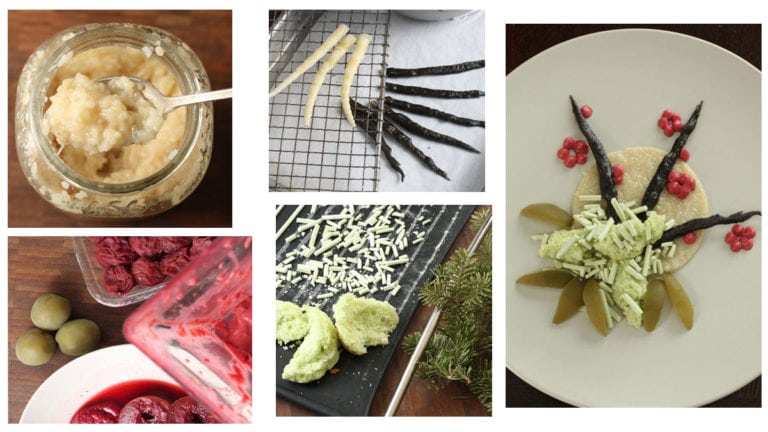
chocolate nest
violet ice cream
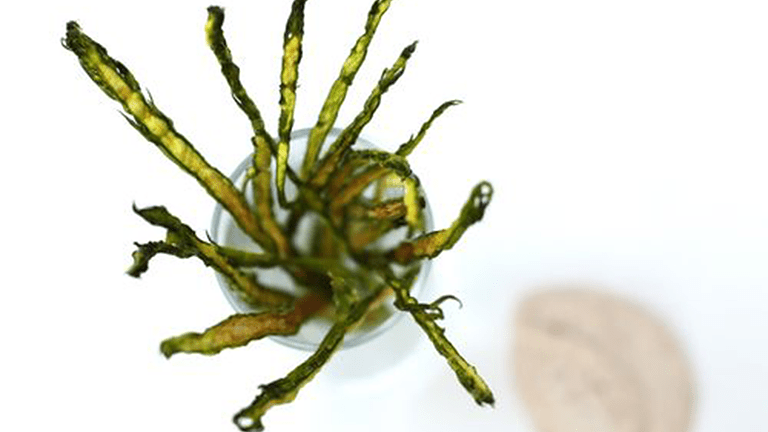
carrot filaments
blackberries
johnny-jump-ups (Viola cornuta)
calendula
violet dust
Download Recipe: Violet nest
Recent Comments