« March 2008 | Main | May 2008 »

April 2008

April 30, 2008

silicone

                    Silicone_029

As a pastry chef, I've relied on molds to give shape to my desserts. I have a large collection which vary in size and shape from the very simple to the ornate and complex. Within the walls of my house, they cover shelves, fill entire cupboards, and lie waiting patiently in boxes. I cannot pick favorites (how can I...many have never been used), but I can tell you that nowadays, the ones that I use most often are made of silicone.

Silicone has revolutionized the way the I bake. Silpats are unparalleled in their ability to release anything that comes in contact with them. The flexibility of silicone molds allow me to form products which are perfectly smooth or deeply cut. The outcropping of new forms and shapes that I find on the market has had me already teetering on the precipice of possibilities.  Finding a product that allows me to make my own molds may have just pushed me over the edge.

I already have a collection of objects set aside to replicate in silicone, but I'm curious...what would you mold?

April 27, 2008

salmon passion fruit hollandaise

Salmonhollandaise03

My play with Transglutaminase continues after an intensive week of catering. Here I've made a salmon ravioli filled with passion fruit hollandaise. When I used to work the line, the hollandaise was made before service and kept in a warm bath. This didn't make sense to me and I insisted on making it to order, which pissed everyone off. They backed down when I proved that a perfect sauce could be made in the time that it took them to get their pans hot.

My entry into the world of cooking was through the sweet side. The skills that I have learned from baking have eased my transition to the savory side of the kitchen. I look for the moments when the two worlds collide and the transition feels seamless.

One day, while making a lemon curd, it occurred to me that I was essentially making a sweetened hollandaise. Although the cooking methods and proportions varies slightly between the two, the chemistry is the same in forming these egg-emulsified sauces. They share the same trio of key ingredients: egg yolks, fat in the form of butter, and acid in the form of lemon juice.  When isolating these ingredients and considering possible alternatives, it becomes easy to imagine flavor variations on the classic hollandaise. Egg yolks are unique in their protein coagulation, but acid can be introduced in the form of any fruit juice that has a PH of 3.0 or lower so as not to over-dilute the egg yolk. Candidates that fall in this range are: grapefruit, lime, cranberries, gooseberries, wild grapes, verjus, raspberries, rhubarb, pomegranates, tamarind, and passion fruit. These are all flavors that I've used to make fruit curds, so why not hollandaise? To bring it back to the savory realm, even the butter can be replaced with solidifying fats such as: foie, bacon, duck fat, serrano fat. Can you see where I'm going? Does this excite you as much as it does me?

For this ravioli, the hollandaise posed a challenge because it needed to solidify in order to glue the thin sheets of salmon around it, then to revert to it's fluid sauce state when reheated. A traditional hollandaise was not stable enough to endure the freezing and cooking process without curdling. I fiddled with a few additives and techniques before hitting on the simple addition of a small amount of gelatin. This allowed the hollandaise to firm up sufficiently without the need to be frozen, which I suspect had destabilized the emulsification, and to remelt in the sous vide bath.

Salmon_hollandaise_ps2


sous vide salmon ravioli filled with passion fruit hollandaise
crispy salmon skin
asparagus ramp puree
spiced rum beads

catering

Just another weekend gig

April252008_007_2

           April252008_012_2

April252008_033

April252008_016

             April252008_044

April252008_038

April252008_091

April252008_063

April252008_076

             April252008_082

April252008_113

What I learned was that the men and women who protect our communities, country, and leaders are very cool, generous, and love to eat.


April 22, 2008

narcissus

days this perfect inspire me on so many levels

Daffodils_copy

April 21, 2008

chicken beef steak

                  Beef_chicken_psp


I am a carnivore. I make no apologies, I eat meat proudly.

There was a period of time that I could not eat meat. A few months into my first pregnancy, the act of  walking into a grocery store turned me into a hound, complete with a vast network of keen olfactory nerves, all of them finely tuned to one scent; that of blood. Where a hound would have salivated, it turned me wretched from nausea. It was months before I could walk into a store unscathed.

When my appetite for meat returned, it was with a vengeance. I craved bloody rare steak with such ardor that it sent me on a quest for the perfect cut of beef to grill or sear. My search ended when I discovered flat iron steak; a remarkable cut of meat whose tenderness is rivaled only by tenderloin, yet possesses the full-on beefy flavor of sirloin. I ate so much steak at that time that I was sure that my next craving would have been for grass.

Instead, I began reveling in the pleasures of a perfectly roasted chicken: crispy skin, juicy meat, and the liquid gold in the form of chicken caramel that sticks to the bottom of the pan.

There were times when the cravings for chicken and steak were simultaneous and urgent. In those instances, I could only wish that they could be fused together.

Sometimes, wishes do come true.

                            Beef_chicken_010

                         Beef_chicken_012


              Beef_chicken_026                                                            

                     chicken breast and flat iron steak
                     beech mushrooms
                     ciopollini onion
                     potato and toasted almond sand
                     miso chicken caramel
                     spring onion sprouts


Cravings aside, chicken and beef that is Maillard cooked form a synergism where the whole is greater than the sum of its parts. They share many flavor compounds and are both full of umami. When combined, individual umami compounds have a magnifying effect on each other and can increase flavor eightfold. Add to that equation potatoes, onions, and mushrooms, all rich in umami, and you can see why these are classic pairings that have stood the test of time.

McDonalds certainly understands the synergism of potatoes and beef. They have built an empire on their french fries which until 1990 were fried in a mixture of about 7% cottonseed oil and 93% beef tallow. They eventually switched to pure vegetable oil after insurmountable criticism about the amount of cholesterol in their fries. But they weren't about to give up their money maker--now, they add "natural beef flavor" to their oil.

For this dish, fried potatoes are a given, but I've presented them in the form of a sand. Micro cubes of potatoes are double fried--the first time at a 275 degrees F. to cook them through and form a skin, then they are cooled and re-fried at 375 degrees F. until golden and crisp. The addition of crushed, toasted almonds accentuates the texture and flavor.

           Bbef_chicken_018

April 17, 2008

meat glue

Beef_chicken_039

Guess what I'm up to?

April 16, 2008

powder, dust, soil, and sand

What draws me to hydrocolloids is their ability to effectively alter texture while maintaining flavor. The textures that they can produce range from thickened liquids and gels to dry crisps and meringues. Within this spectrum, there lies a texture that is dry on the plate, yet soft and melting on the palate; it is a powder.Tapmalto_008
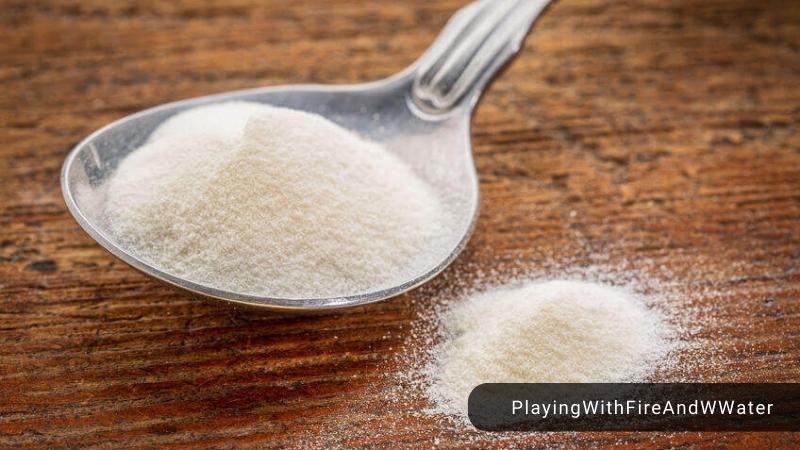
Tapioca Maltodextrin(TM) is a modified food starch derived from the starchy roots of cassava. It can gel in cold solution, but is most noted for its ability to stabilize fatty compounds, a relationship which can be exploited to produce powders. When combined with an approximate 2:1 ratio by weight of TM to fat, the TM will absorb the fat and lock in its flavor. When the powder that is formed comes in contact with the warm, moist environment of the tongue, it will melt and release the flavor.
If this sounds too good to be true, it's perhaps because it can be--at least in some instances. I've found that with some fats, the TM leaves a stickiness that clings to the teeth and interrupts the experience, while others melt away cleaner. I'm not certain if this variation is due to excess moisture in the fat, ratios, or if it is an inherent quality of TM, but it warrants further exploration.
The variety of fats that can be used to flavor powders are only limited by the imagination. Flavored oils, buTapmalto_003_2tters (including peanut butter and nutella), chocolate, and rendered animal fats are all fair game. High-fat dairy products can also be used, providing that they don't possess a high moisture content.
The blending of the two ingredients is almost effortless. For small quantities, it can be as simple as tossing the TM and fat in a bowl with a fork, or pulsing in a food processor for larger amounts. Both methods benefit from a final pass through a sieve to lighten the mixture and break up clumps.
For a crisper, sandy texture, a more balanced ratio of TM to fat is used to produce a paste that can be spread on silpat, dried in a low oven or dehydrator, then grated. A similar product can be made from whiPowder_013pped, dried methylcellulose, although in this case, the flavor comes from a non-fat base.
The melting factor of powders produced from TM and fat may be unique, but there are other, low-tech ways to achieve textural components such as dust, soil, and sand:
Dusts are very fine versions of powders and are traditionally used as ingredients or flavoring agents, but when treated as a separate component, they can act as a dry sauce. Virtually anything that can be successfully dried and pulverized can serve as dust: vegetables, herbs, citrus zest, dairy products, meat, seafood, nuts, sauces...the list goes on. In some cases, you can find these products, already processed, on store shelves: dried milk,Powder_032 dried buttermilk, dried yogurt, ground shrimp, coconut powder, chili powder, etc. The real fun comes in blending these flavors to create more complex, flavored dusts. Wylie Dufresne uses this concept to produce "pizza pebbles" with dusts  of tomato, garlic, parmesan, and bread,  then binds them together with olive oil.
Soil and sand share the same consistency, but differ in texture; soil being softer and moister than sand. These can be made from many of the already mentioned ingredients with the addition of baked goods such as: flavored breads, cakes, cookies, pastry and crackers.

April 11, 2008

fluid gel

Fluid_gel_ps
beet fluid gel
Cara Cara orange powder

A fluid gel lies somewhere between a gel, a puree, and a sauce. In fact, it is all three of these things.
It is made by combining a flavored base with a shear-thinning (the ability to break down to a fluid state by vigorous agitation, as in a blender, and remain fluid) hydrocolloid such as agar agar or gellan, and allowing it to solidify. The solid gel is then sheared in a blender into a creamy, fluid state, and remains that way. Using agar also allows it to be reheated up to 185F/ 85C before it remelts.
A good example of a fluid gel and shear-thinning is ketchup. Ever wonder how a few good shakes will loosen it up and allow it to flow from the bottle? Well, now you know. You're welcome.
The greatest advantage of this technique is that it allows us to take a thin, highly flavored liquid such as beet juice, and lend it body and viscosity without the use of flavor-diluting starches.
In the end, isn't it really about the flavor?

fluid gel
1 cup (185 g) liquid flavor base
1/2 tsp (2 g) agar
1/8 tsp (.35 g) xanthan
Blend agar and xanthan into base. Place in a saucepan and bring to a boil. Allow to cool until solidified. Place solid gel in a blender and blend until creamy.

April 07, 2008

bbq pulled pork

Uncle Willie's is a small restaurant in Waterbury, Connecticut that features "real down home pit bbq". It is an unassuming place, located in a strip mall and the decor is nondescript. The food is the real draw there and has garnered it many accolades; among them, Jane and Michael Stern's proclamation "one of America's top ten barbecue restaurants". Those are some big shoes to fill for a bbq joint in the Northeast, but Uncle Willie's not only fills them, but runs triathlons. In addition to their bbq, which is cooked for 12-18 hours over oak and hickory, they offer award-winning fried chicken and volcanic wings. I go there for the "like velvet" pulled pork--deeply flavored, sensual, complex with the mysteries of smoke--it is the stuff that elevates pork to mythical heights.

Pulledporkbbq_013

pulled pork
ancho pomegranate bbq sheet
fried coleslaw
trumpet mushroom fries

The pulled pork that I make at home does not even try to compete with Uncle Willie's, but it is satisfying nonetheless. I rub pork shoulder with a blend of dried herbs and spices and cook it long and slow in the oven. While it is still warm, it lends itself to compression, as I've done here. When tightly wrapped in plastic, the unctuous juices and fat will bind the shreds into a compact shape, which then releases with the pull of a fork.

The sauce is made from a butterscotch and vinegar base, to which I added pomegranate molasses and ground ancho chilies that were reconstituted in OJ. The balance of flavors hit the right notes: caramelized sweetness up front, fruit and acid roll over the tongue, grand finale of heat and spice kick in at the back. I had intended to turn this into a fluid gel, so I added agar, but then decided to present it as a sheet. The agar allows it to be heated.

The fried coleslaw brought in the elements of my favorite way to enjoy pulled pork at Uncle Willie's--the Carolina pork on a bun. Can you guess what makes it work?
I'll be glad to dish if anyone can answer this riddle:

What can you add to something to make it lighter in weight and lesser in mass?

hint: it was added to a component of this dish.

April 04, 2008

asparagus scallop black sesame

Asparagus has always been my herald to spring. Once they poke their pointed heads out from the still earth, they signal to the rhubarb and fraises de bois that it is safe to come out.
At the restaurant, part of my morning routine is to blanch asparagus. Standing at the stove, going through the ballet of blanching-- dropping handfuls of loose spears into a pot of briny, violently boiling water, scooping them out at the critical moment, and quickly plunging them into a bowl of icy water to halt the cooking process and set the color and texture--it is tempting to try to fit in other tasks, but asparagus demands your full attention. Variables such as soil mineral content, growing medium, fertilization, and harvest stage will all effect cell density within each box, each bundle, and even each stalk, requiring careful monitoring in the cooking stage, as it can quickly cross the line from al dente to baby food.
This is basic cooking; a menial task in the scope of the days' preparations, but a crucial technique to master.


Blacksesamescallopasparagus_ps

ginger honey glazed scallops
blanched asparagus whips
black sesame ice cream

Food photography lesson #1: This was my first attempt at photographing a dish that is intended to be served with widely contrasting temperatures. It took 3 rounds of reassembling this dish before getting a shot that did not look like a poster for "What Not To Eat". In a moment of brilliant clarity, it occurred to me that there was no reason that, for the sake of photography, the components could not all be at the same temperature. Sometimes, it is the glaringly obvious things that press my stupid button.

Intro

  • Cooking, elementally, is controlling heat and moisture. The great cooks are masters of fire and water. Me, I'm still playing...welcome to my playground.

of interest