Every January, we are inundated with lists that forecast trends for the coming year. As someone who works in fashion as well as food, watching trends is more than a curiosity; its a vital tool for staying current.
In fashion, as in art and music, it is often the innovators that drive the trends, creating perpetual fluxes that shape and define current culture. In these arenas, trends move quickly from concept to mainstream, where consumers not only embrace innovation but expect it.
By contrast, in the visceral arena of food, innovation moves slowly and is often met with reluctance. At their best, consumer-driven trends have markedly improved the state of our food with movements towards organic, local and sustainable. At their worst, they subject us to tsunamis of fads, convenience, and medical quackery. How else would you explain no-carb bread, candy bars-as-meals, and Sandra Lee*?
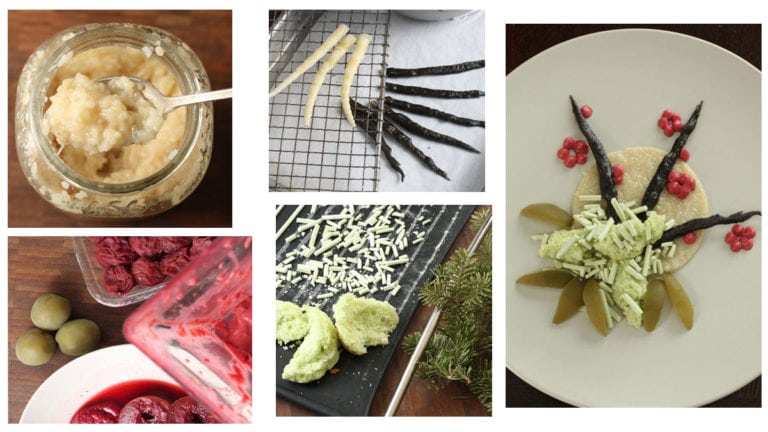
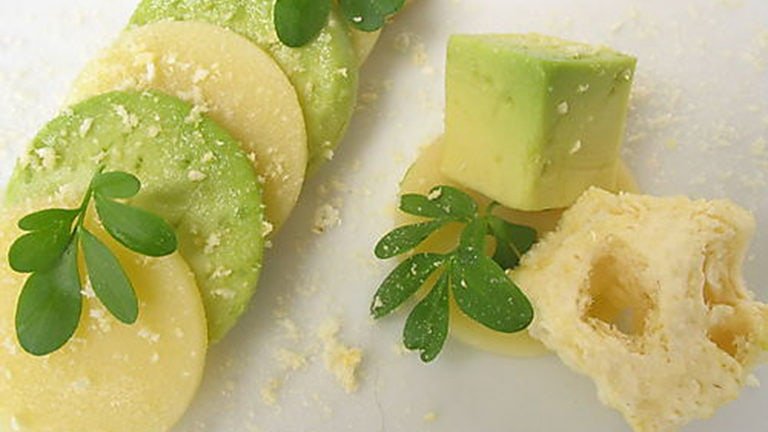
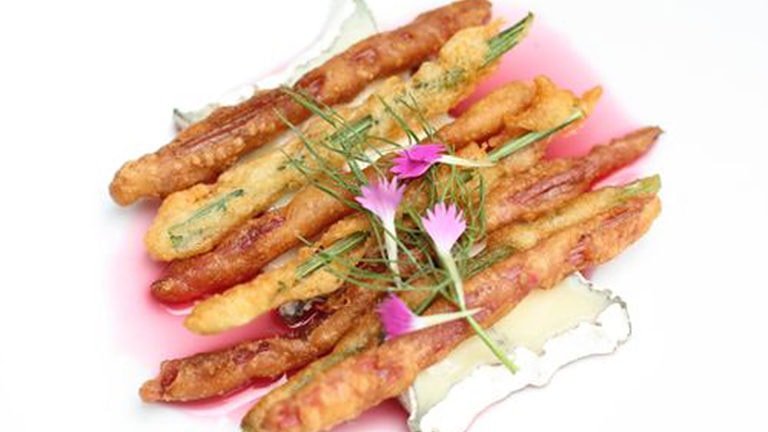
Innovation, by definition, means the introduction of something new. In this spirit, allow me to introduce a list of focused flavors that I would like to see become a trend. Let me preface by saying that this is not my innovation--avant-garde chefs have been exploring these flavors for years.**
So, are you intrigued? bored? shocked? ready to hurl?
Not surprisingly, I've seen all of these reactions when discussing the flavor of conifers in food, but its really not so radical...or new. In fact, some have a long history in food & beverage:
- Juniper is the primary flavorant of gin.
- Birch beer, made from birch bark, is a nostalgic beverage from the nineteenth century.
- Cedar was used by North American Indians long before Europeans settled here.
- Pine nuts, the buttery seed of the genus Pinus, have been consumed since the Paleolithic period.
Moreover, using aromatic parts of trees to flavor food is routine in any kitchen. Peppercorns, nutmeg, cinnamon and bay leaf are used by even a novice cook.
It makes me question why pine and all of its tall friends have been largely ignored. It could be because they tend to be overpowering and evocative of Christmas trees, medicine, and... well... turpentine. Indeed, terpene, the family of aroma compounds to which conifers belong, was named after turpentine, a product of pine resin.
Terpenes are a large class of hydrocarbons that are highly aromatic. Members of the terpene family are: pinene (the aroma of conifers), limonene (the aroma of citrus), menthol (the aroma of peppermint), thujone (the aroma of sage), thymol (the aroma of thyme) and many more that comprise the flavor of the majority of herbs and spices.
Conifers aren't so scary when you realize that they are only a few molecules away from that of rosemary, sage, thyme and mint.
*not to pick on Sandra Lee, whom I'm sure is a lovely gal, but doesn't "semi-homemade" = "semi-good"?
**one of my most memorable dishes of 2008 was the chicken liver spaetzle, pine, and cocoa nibs at WD-50.
WARNING: As with all unfamiliar plants, be sure to correctly identify them before consuming. Although those listed here are known to be safe in small to moderate doses, the ones that contain the terpene thujone may be harmful if consumed in large doses-- large meaning more than a rational individual could possibly consume. Thujone is present in cedar, cypress, and juniper. My exploration will be limited to using flavor from the natural plant source--use caution with concentrated essential oils. Under no circumstances should you consume any part of the conifer yew (Taxus) which contain highly toxic alkaloids and can be identified by its soft red berries.

Recent Comments