When I was first learning to cook, I found a recipe for fried pasta that intrigued me. As I recall, the instructions were: cook the pasta in boiling water, drain, deep fry. Being a novice, I didn't fully understand the hostile incompatibility of hot oil and water. But when I dropped the still-wet pasta into the pot of hot oil and watched it violently sputter and overflow, I at least had the sense to step back and turn off the flame.
I think every cook has a hot oil story, some punctuated with scars. I have those too, but from a later incident. That first traumatic encounter taught me that hot oil is no joke. With new respect, I cleaned up the mess and attempted another batch after thoroughly draining the remaining pasta and patting it dry. It still protested— but it didn't overflow.
I served the fried pasta with a marinara dip at a gathering of friends. Everyone seemed to enjoy it, which pleased me, although I didn't think that I would ever make it again.
But, you see, I was wrong. I have made it again... many times. But only because I learned of a better way.
Learning is about making connections. We gather bits of information and experiences and link them together into something cohesive that we can hold on to. Life's epiphanies— whether large or small— come from finding the missing links.
And so it was, while attending a workshop at The French Culinary Institute with Dave Arnold and Nils Noren that I was given the missing link for fried pasta: dehydrate the cooked pasta before frying. Yes, it's an extra step that adds 4-6 hours to the process, but it makes a world of difference. Not only does the dry pasta fry neatly and efficiently, it also blisters and puffs out extravagantly.
Lots of drama, none of the trauma.
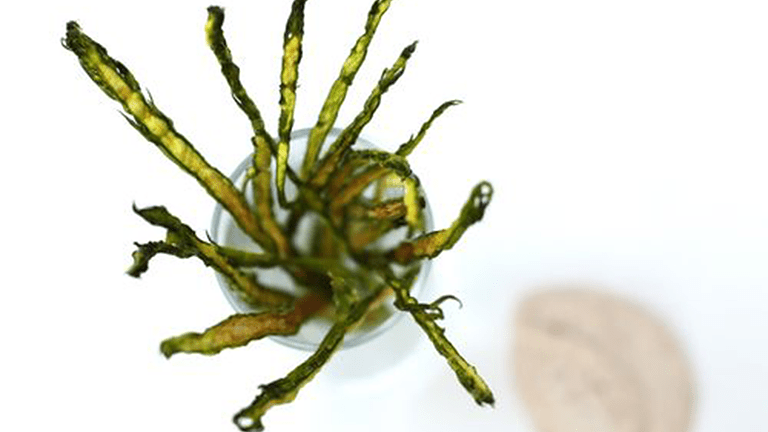
puffed pasta
Bring a pot of salted water to a boil. Add pasta and cook until very tender (double the time on the package). Drain well. Spread out on dehydrator trays and dehydrate at 50C/120F for 4-6 hours until completely dry. Alternately, cooked pasta can be spread on a rack or silpat-lined baking sheets and dried in a low oven, or in the sun on a warm, dry day. (Note: tubular pasta may need to be supported with straws or dowels to prevent it from collapsing and loosing it's shape.) Pasta can be dehydrated in bulk and stored in airtight containers for months.
To puff: drop small batches of dehydrated pasta into a pot of oil that has been heated to 190C/375F and fry until puffed and golden. Drain on paper towels and sprinkle with desired seasoning or serve with a dip.

Recent Comments